

Venture concept / Product design
Brikside.
An explorable pixel city where independent businesses can make a place, show their work and meet the neighbours.
- My role
- Product concept, brand and experience direction, interface design and an AI-assisted prototype build.
- Project
- Venture prototype
01 / THE BRIEF
Make discovery feel more personal.
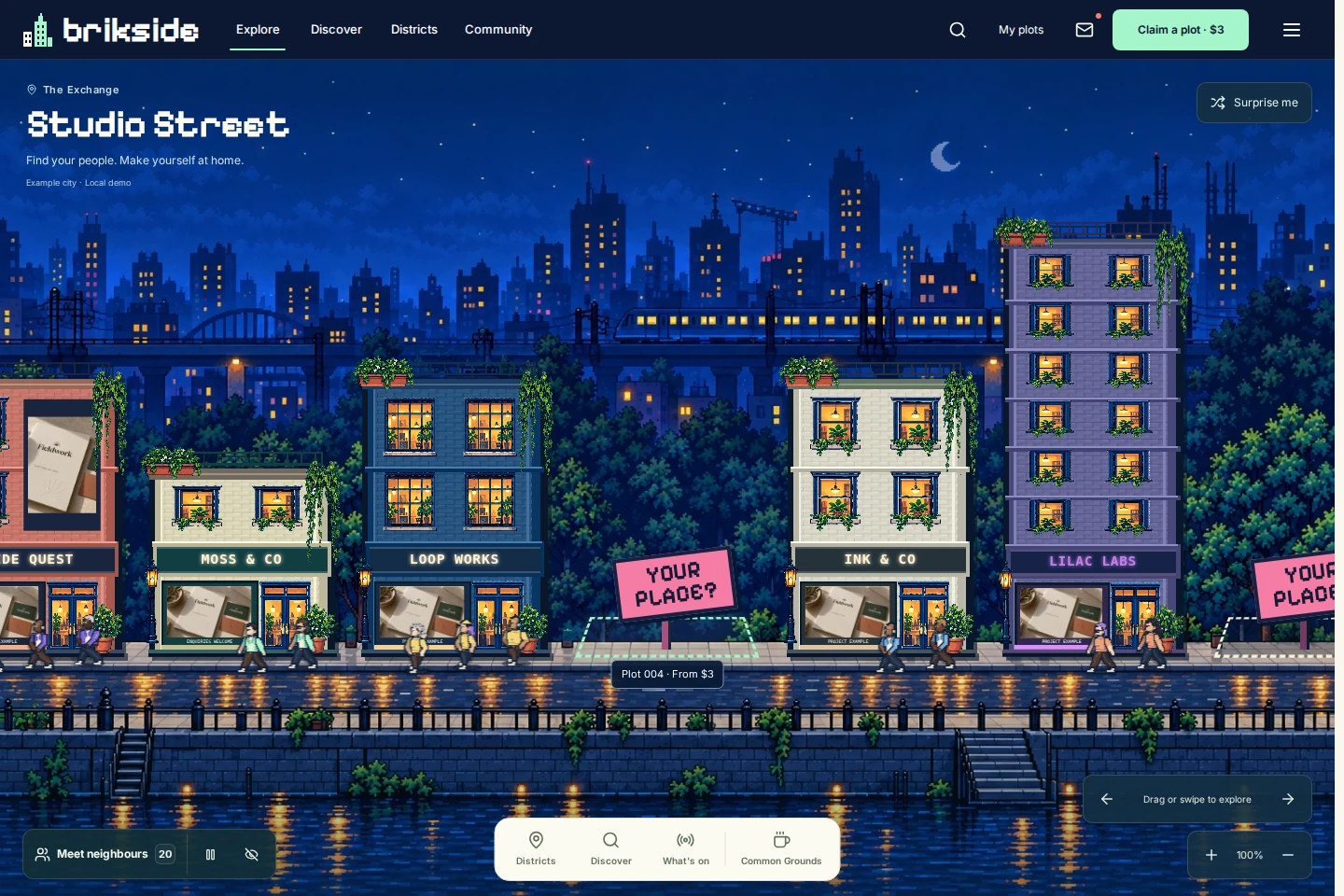
The question behind Brikside was how to make discovering an independent business feel more personal than browsing another list of links. A small business needs somewhere to express its character, show what it does and give a visitor a useful next step. I explored whether a digital neighbourhood could bring those needs together. The challenge was making the city more than a decorative illustration: each building had to connect to a business, a working profile and a coherent set of owner tools.
02 / THE IDEA
A street becomes the interface.
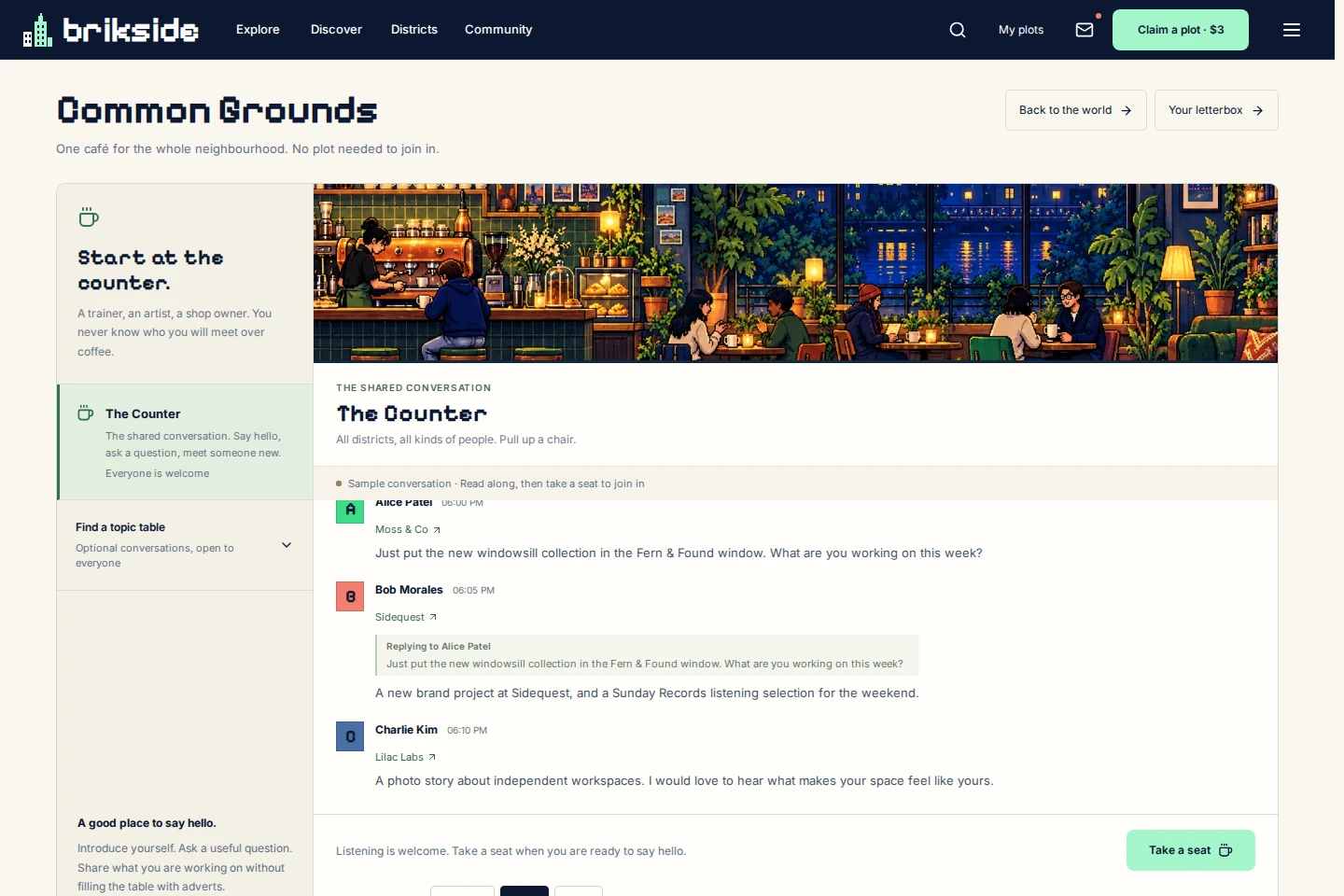
Give each business a place on an explorable street. Different districts bring related interests together, while customisable buildings give each business a recognisable presence. The street is the navigation: discover a place, meet its representatives, open the profile or leave a letter. A shared café creates a separate setting for community conversation. Underneath the playful metaphor is an important product decision: the business and its address are separate, so moving or selling a plot does not transfer its identity or private conversations.
03 / THE BUILD
Build a connected world.
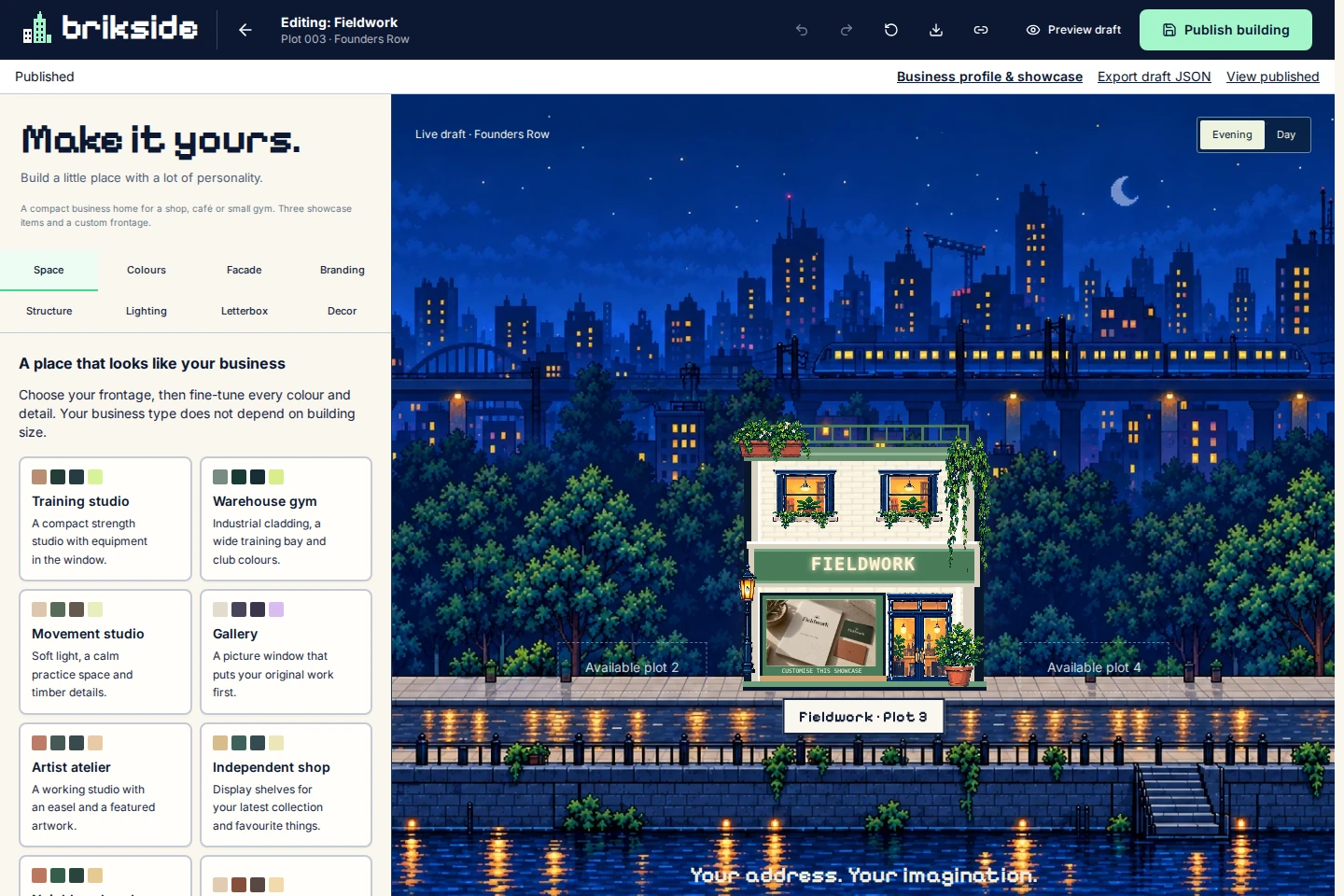
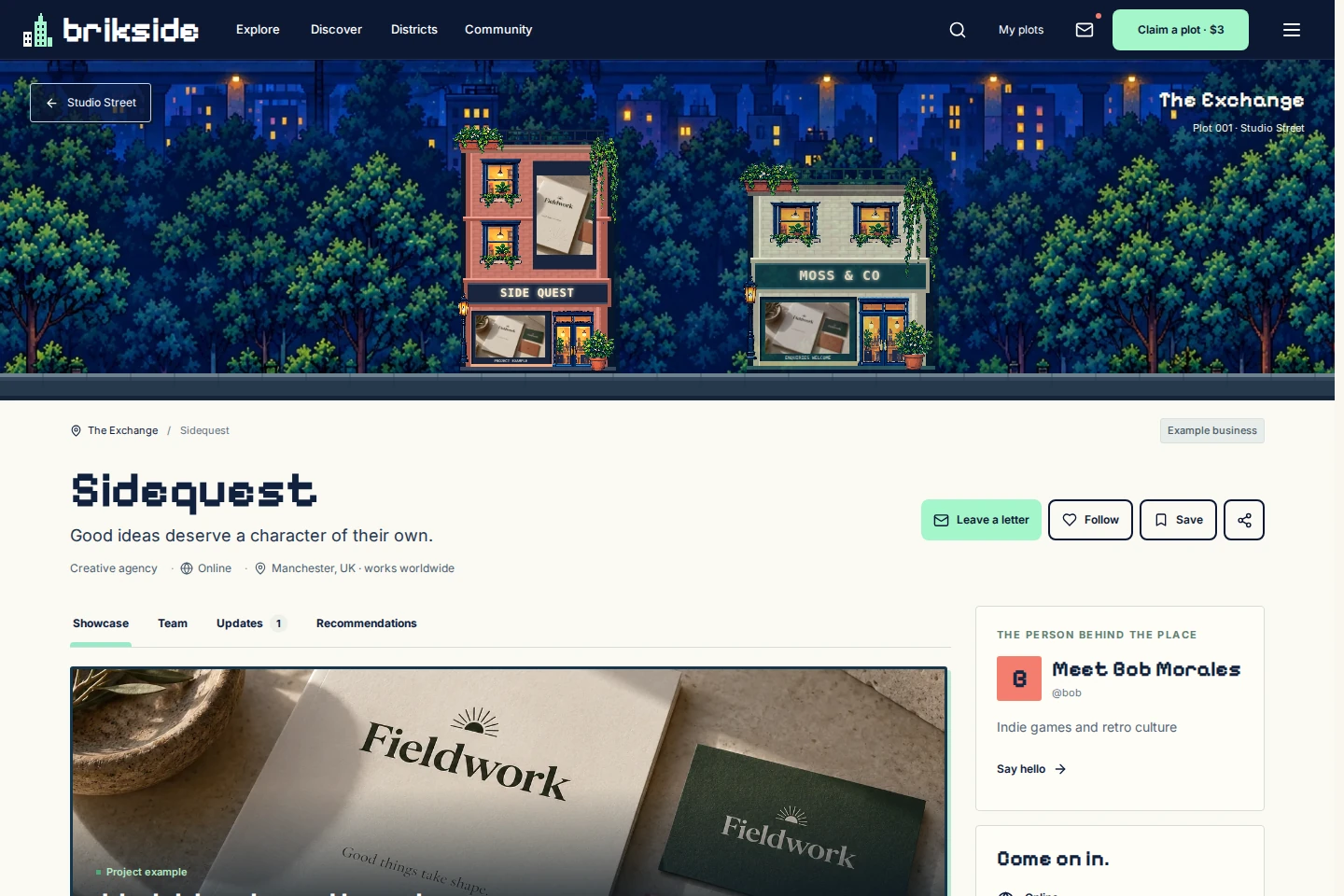
I developed a connected prototype spanning exploration, business discovery, claiming a place, building customisation, profile editing and owner tools. Six themed districts contain labelled example businesses, with searchable categories, locations and online or in-person availability. One modular building system powers the street, editor, profile and preview, keeping changes consistent across the experience. Owners can customise the frontage, add featured work and create pixel representatives. Visitors can explore profiles, save or follow a place and try the letterbox and café flows. The prototype also includes offers, analytics and plan previews. These interactions currently use browser-local demo data; they demonstrate the product without presenting fictional traffic, payments or ownership as a live service.
04 / THE SCOPE
What went into it.
- 01
The brand and the world
Developed a side-on pixel city with blue-hour skies, warm windows and illustrated architecture. Navy, cream and mint frame the interface; pixel display type is paired with readable controls and body text.
- 02
A connected building system
Built a shared modular renderer for the street, editor and profiles. Eight editing areas cover the space, palette, façade, branding, structure, lighting, letterbox and decoration, alongside drafts, undo, redo and image export.
- 03
Discovery with useful depth
Organised six districts around different interests, then connected search, street selection and full business profiles. Featured work, contact details, services, customer questions and external actions make each place useful beyond its façade.
- 04
People and community
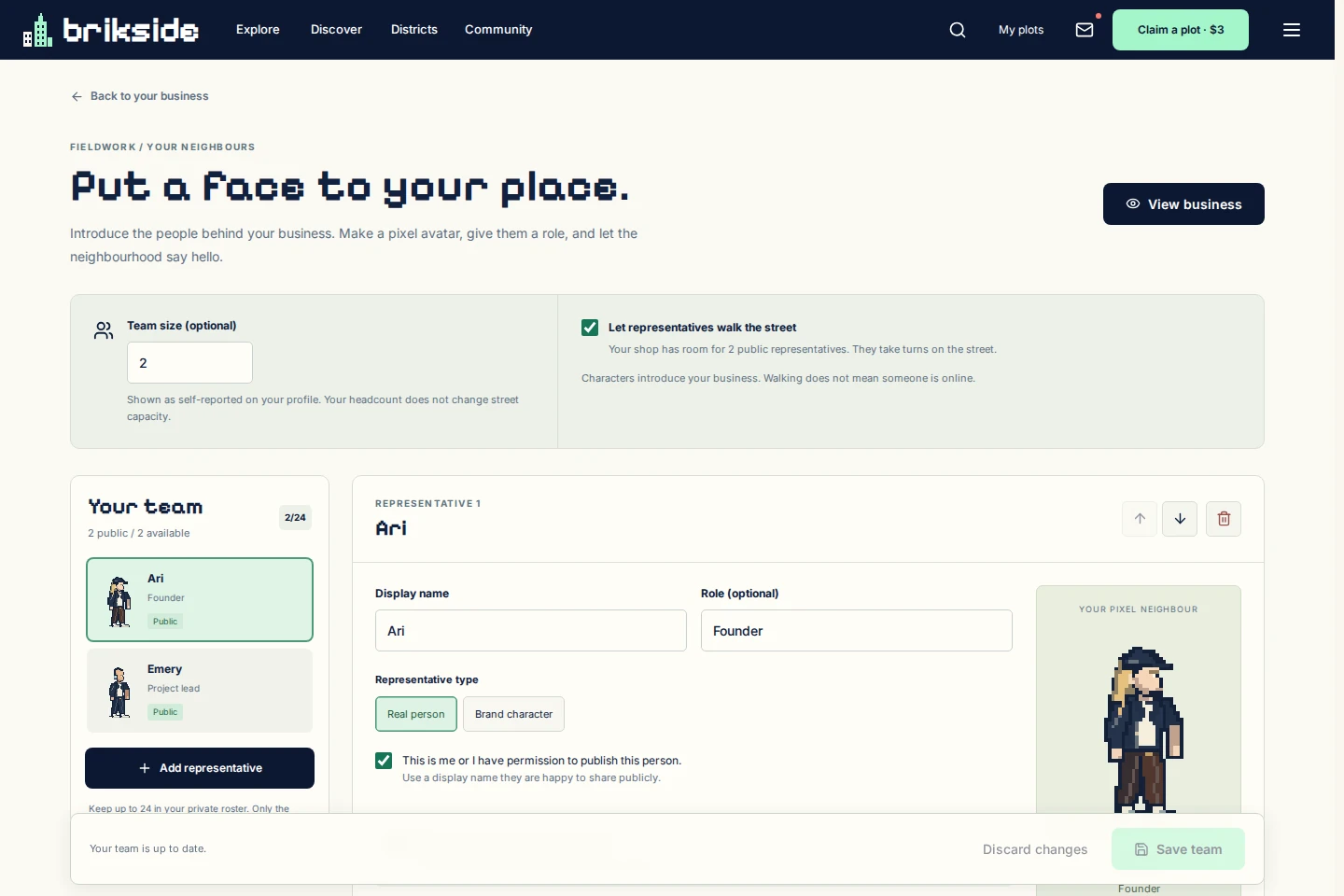
Added customisable pixel teams, walking representatives and a still neighbour list. Public profiles, recommendations, letters and Common Grounds explore different kinds of interaction, with separate drafts and clear sample-content boundaries.
- 05
The commercial model
Explored building capacity, optional subscriptions and local offer flows. Business identity stays separate from the plot, so an address can change hands without taking the seller’s team, reputation or private conversations.
- 06
The less visible work
Worked through draft recovery, failed saves, local data migration, owner permissions and mobile panels. Public page generation, metadata and browser analytics are included, with explicit boundaries between a prototype and a launch-ready service.
IN THE DETAIL
A closer look.
05 / THE RESULT
Where it stands.
The result is a substantial interactive product prototype: six districts, a configurable city, business profiles, an owner workspace and connected community flows. It makes the concept tangible enough to explore and develop further. It is still a browser-local demonstration; real payments, durable ownership, shared messaging and production analytics need service integration before launch.
Interactive product prototype · browser-local demo
Co-own itInterested in building it together? Co-own it starts a conversation.